

Key Takeaways
- The right fire feature depends on how you want to use the space, not just how it looks.
- Fire pits, fire tables, bowls and outdoor fireplaces each create a very different kind of gathering space.
- Placement, gas lines and lighting are best planned with the rest of the landscape, not added afterward.
In Ontario, September and October bring some of the best evenings of the year. The air is cool, the bugs are gone, and the light fades early. A well-placed fire feature is what keeps you outside for them, rather than packing up the patio as soon as the sun goes down.
Choosing one is more than picking a product. A fire feature becomes a focal point and a gathering place, and it shapes how people move through and settle into your outdoor space. Below we walk through the main options, what each one does well, and how we approach them as part of a complete landscape design.


Start with How You Want to Use the Space
Before choosing a style, picture the evenings you want to have. A quiet coffee for two on a cool October morning calls for something different than a crowd of twelve after a backyard dinner. Ask yourself a few questions:
- How many people will usually gather around it?
- Is it a destination you walk out to, or part of the main patio?
- Do you want the crackle and smell of real wood, or flame at the turn of a key?
- Should it work as a table or surface when it isn’t lit?
The answers usually point clearly toward one of the options below.
Fire Pits: The Classic Gathering Place
A fire pit is the most social fire feature. People sit in a circle, face each other, and the conversation follows. It suits families, storytelling and long evenings.
At our Old World Charm project, a circular fire pit built from hand-chiseled stone sits beside the outdoor kitchen as the property’s social hearth. Built-in benches topped with weather-treated timber give everyone a place to sit, and recessed LED uplights warm the surrounding masonry so the space keeps working well after dark.
Wood or gas? Wood-burning pits give you real crackle and the classic campfire experience, but they come with smoke, ash and cleanup. Many Ontario municipalities also limit or prohibit open-air burning, so check your local bylaw early in the planning stage. Gas fire pits, fuelled by natural gas or propane, light instantly, burn clean and shut off with a switch. For most of the homes we design, gas is the more practical everyday choice.


Fire Tables and Fire Bowls: Clean Lines, Contemporary Feel
For a more contemporary look, fire tables and fire bowls bring flame into the space in a more sculptural way. A fire bowl works as a focal point, almost like a piece of outdoor art. A fire table adds versatility, giving you a ledge for drinks and plates while lit and a usable surface when it isn’t.
At The Green Room, a custom-built fire bowl anchors a modern stone patio, framed by natural stone and concrete pavers in a clean geometric pattern. Accent lighting and comfortable seating turn what was a traditional front yard into a private retreat used across the seasons.
Gas fire tables are typically connected to a natural gas line or a concealed propane tank. A permanent gas line means planning the route before the patio goes in, which is one of the reasons we design fire features alongside the hardscape rather than after it.
Outdoor Fireplaces: An Extension of Your Home
An outdoor fireplace creates a true outdoor room. Its vertical form gives the space a backdrop and a sense of enclosure, and it often doubles as privacy screening from neighbours. Paired with deep seating and a covered structure, it is the most direct way to make a patio feel like an extension of your home.
Fireplaces are architectural elements, so scale and proportion matter. A fireplace that is too small looks like an afterthought. One that is too large overwhelms the patio and the house. The materials should relate to the home itself: the same stone, a complementary masonry, or a clean finish that echoes the architecture. For more on building the framework that features like this sit within, see Hardscaping Basics.
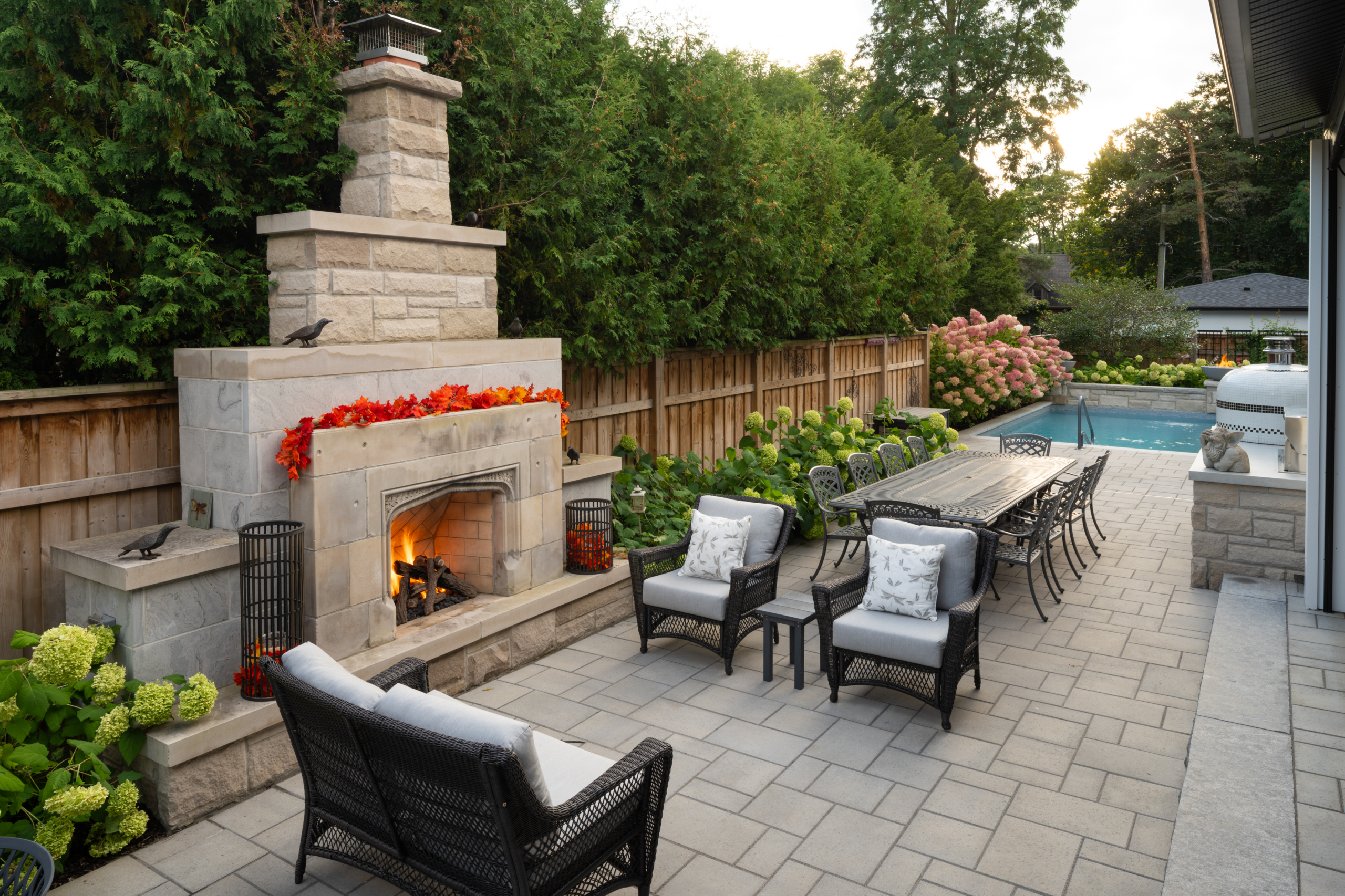

Fire as a Destination
A fire feature does not have to sit right outside the back door. Set a little further out, it becomes a destination, a reason to move through the landscape.
At Petite & Peaceful, jumbo flagstone steppers lead away from the main patio to a fire pit zone with dry stack stone benches. On the way, a dry stack stone water feature spills into a hidden, pondless basin, so the sound of water greets you before you reach the fire. The fire pit was part of a larger transformation of the property that also solved seasonal flooding with new drainage and grading.
That is the difference between adding a fire feature and designing with fire. The feature is placed where it shapes how the whole yard is used.
Fire and Water Together
Combining fire with water, such as fire bowls set above a reflecting pool or flame rising from a water feature, creates one of the most tranquil effects in landscape design. The movement and sound of water against the glow of flame draws people in from across the yard. These features take careful engineering and coordination of gas, water and electrical, and they are best designed from the start. Our post on water features covers the water side in more detail.
Placement Matters as Much as the Feature
Wherever you land, a few design considerations make the difference between a fire feature that gets used every week and one that sits cold:
- Wind and smoke. Study the prevailing wind so smoke and heat move away from seating and the house.
- Sightlines. A fire feature is a focal point. Place it where it can be seen from inside the house and from the main patio.
- Seating and circulation. Leave room for comfortable seating and clear paths in and out, with clearances that meet the manufacturer’s specifications and local code.
- Lighting. Pair fire with landscape lighting on steps, paths and plantings so the space is safe and inviting beyond the glow of the flame.
- Gas and utilities. Plan gas lines, controls and any electrical before the hardscape goes in.
A fire feature designed this way becomes part of a cohesive outdoor space, the same thinking we apply to multi-use outdoor living areas and patios designed for every season.
Extend Your Season, Every Season
The best fire features earn their place across the year: cool spring evenings, late summer nights after a swim, and those crisp fall evenings when the leaves are turning. With the right placement, lighting and seating, your patio stays in use well past the point when most Ontario backyards go quiet.
Thinking About Adding Fire to Your Outdoor Space?
Whether you are picturing a stone fire pit, a sleek fire table or a full outdoor fireplace, the best results come from designing it as part of the whole landscape. Our team will help you choose the right feature, place it where it works best, and build it to last. We are by your side, every step of the way, from first sketch to the first fire of the season.
Explore our Patios and Living Spaces and Decks and Structures services, see how we work in From Concept to Completion: The Landscape Design Process, or book a consultation to start planning.
